


October 15, 2026
How to clear App Store cache

Share


Clearing the App Store cache fixes store pages that won’t load, outdated app information, and sign-in problems with your Apple Account (Apple ID). On a Mac, App Store keeps its cache in two places: your user Library folder and a temporary folder that macOS creates for each user.
This guide shows how to clear both places with App Cleaner & Uninstaller or by hand. It also explains how to reset App Store when a clean cache is not enough, and what works on iPhone and iPad. We tested every Mac step on macOS 27 Golden Gate with App Cleaner & Uninstaller 10.

This Article Contains
Clear the App Store cache in one list

What is the App Store cache?
The App Store cache is a set of temporary files that help App Store open and show pages faster. App Store displays its pages with WebKit, the engine behind Safari. So its cache works like a browser cache: it keeps copies of store pages, images, and app listings.
Like a browser cache, these files can become outdated or corrupt. Then App Store may show old information, fail to load pages, or stick to the wrong Apple Account. After you delete the cache, App Store downloads fresh data the next time you open it.
On a Mac, App Store keeps its cache in these folders:
- and
~/Library/Caches/com.apple.appstoreCopy
in your user Library folder~/Library/Caches/com.apple.appstoreagentCopy
- , inside a temporary folder with a random name that macOS creates for each user
/private/var/folders/…/C/com.apple.AppStoreCopy
- Folders named next to it, with the caches of App Store’s WebKit processes
com.apple.WebKit…+com.apple.AppStoreCopy
Note:
The App Store cache is small. On our test Mac, App Cleaner & Uninstaller counted 31 cache items with a total of 713 KB. Clearing the cache fixes App Store problems but frees little disk space.
Should I remove the App Store cache on a Mac?
Clear the cache when App Store misbehaves. Before you do, try the simple fixes for problems with the App Store:
- Check that your Mac is connected to the internet.
- Install the latest macOS update in System Settings → General → Software Update. The current version is macOS 27 Golden Gate, and App Store gets its updates together with macOS.
- Restart your Mac.
If App Store still fails, clear its cache. A fresh cache helps when:
- App Store loads slowly or doesn’t load pages.
- App pages show an old version or old information.
- You can’t open or update an app from App Store.
- App Store signs in with the wrong Apple Account.
If the problem stays after you clear the cache, reset App Store.
The quickest way to clear the App Store cache on a Mac
App Cleaner & Uninstaller by Nektony removes apps together with their service files. It can also clear one app’s caches and leave the app installed. For App Store, it finds the caches in both places and shows them in one list.
- Download and launch App Cleaner & Uninstaller.
- Quit App Store if it is open.
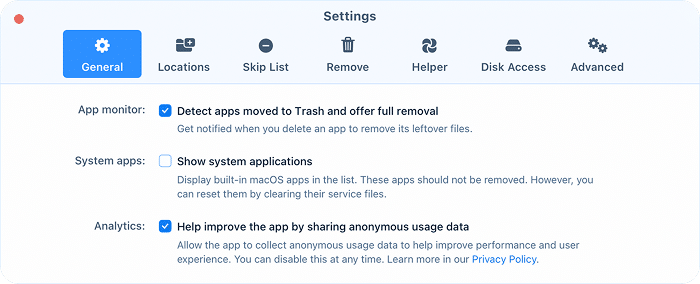
- Open the app’s Settings and go to the General tab.
- Under System apps, tick Show system applications. App Store is a built-in macOS app, and the list shows built-in apps only with this option on.

- Close Settings and type app store in the search field.
- Select App Store. Its card shows 201 files and folders, Apple as the developer, and Apple System in App verification.
- Switch on Expert Mode at the top of the right panel. App Store’s files appear in groups: Library, Caches, Containers, and more.
- Tick the Caches group and leave the other groups unticked. On our test Mac, the group held 13 files and 18 folders, 713 KB in total.

- Click Remove.
- Check the list in the Review and confirm removal of selected items window and click Remove. App Cleaner & Uninstaller moves the files to the Trash, so you can put them back until you empty it.
- Empty the Trash.

App Store builds a new cache the next time you open it.
How to reset App Store on Mac
If a clean cache doesn’t fix App Store, reset it. Reset Application in App Cleaner & Uninstaller removes all of App Store’s service files: caches, the data container, the preferences file, and support folders. App Store itself stays installed and starts with fresh data on its next launch.
| Option | What it removes | On our test Mac |
|---|---|---|
| Clear the cache | The Caches group only | 31 items, 713 KB |
| Reset Application | All service files, including the container, caches, and preferences file | 189 items, 13.3 MB |
In both cases, App Store stays on your Mac.
- Quit App Store.
- In App Cleaner & Uninstaller, check that Show system applications is on (see the steps above).
- Find App Store in the list and right-click it.
- Choose Reset Application.
- Check the list in the Review and confirm removal of selected items window. On our test Mac, App Store Cleanup held 189 items, 13.3 MB in total.
- Click Remove. The files go to the Trash, so the reset can be undone until you empty it.
- Open App Store and check that it works. Then empty the Trash.


~/Library/Containers/com.apple.AppStore
Copy
With Expert Mode on, the right-click menu has two more items: Select Application for Removal and Select Service Files for Removal. A reset needs only Reset Application.
The list also includes App Store’s preferences file, com.apple.AppStore.plist. After the reset, open App Store → Settings and check your choices there.
How to manually remove the App Store cache on a Mac
To clear the cache by hand, you empty three sets of App Store folders: the main cache folder in your temporary files, two folders in your Library, and the WebKit caches. It takes one Terminal command and a few Finder windows.
Warning:
~/Library/Caches
Copy
/private/var/folders
Copy
Step 1. Empty the main App Store cache folder
- Quit App Store.
- Open Terminal from Applications → Utilities.
- Paste this command and press Return. It finds your temporary folder and opens the App Store cache inside it.
open $TMPDIR../C/com.apple.appstore/Copy

- Finder opens the com.apple.AppStore cache folder. On our test Mac, it held com.apple.AppStore, com.apple.metalfe, and com.apple.scriptmanager2.le.cache.
- Press Command+A to select all items in the folder.
- Press Command+Delete to move them to the Trash.

Step 2. Empty the App Store folders in your Library
- In Finder, press Command+Shift+G.
- Paste and press Return. The tilde (~) stands for your home folder, so this path leads to the Caches folder in your user Library.
~/Library/CachesCopy

- Open the com.apple.appstore folder, select all items inside, and move them to the Trash.
- Do the same in the com.apple.appstoreagent folder.

Step 3. Delete the WebKit caches
- Press Command+Shift+G again, paste , and press Return.
/private/var/foldersCopy
- Type com.apple.AppStore in the Finder search field.
- Next to Search, click “folders” to search only inside this folder.

- Select the folders whose names start with com.apple.WebKit and end with +com.apple.AppStore. Our test Mac had three of them.
- Move them to the Trash.

When you finish all three steps, empty the Trash. App Store creates new cache files the next time you open it.
Pro Tip:
To see how much space a cache folder takes before you delete it, select the folder and press Command+I. The Get Info window shows its size.
How to clear the App Store cache on iPhone and iPad
iOS and iPadOS come with more limitations than macOS. For example, you generally can’t remove system files on an iPhone without a jailbreak. However, a forced restart of the App Store may help. Here is how to do it:
- Open the App Store on your device.
- Open the App Switcher. On a device without a Home button, swipe up from the bottom of the screen and pause in the middle. On a device with a Home button, double-click it.
- Swipe up on the App Store preview to close it.
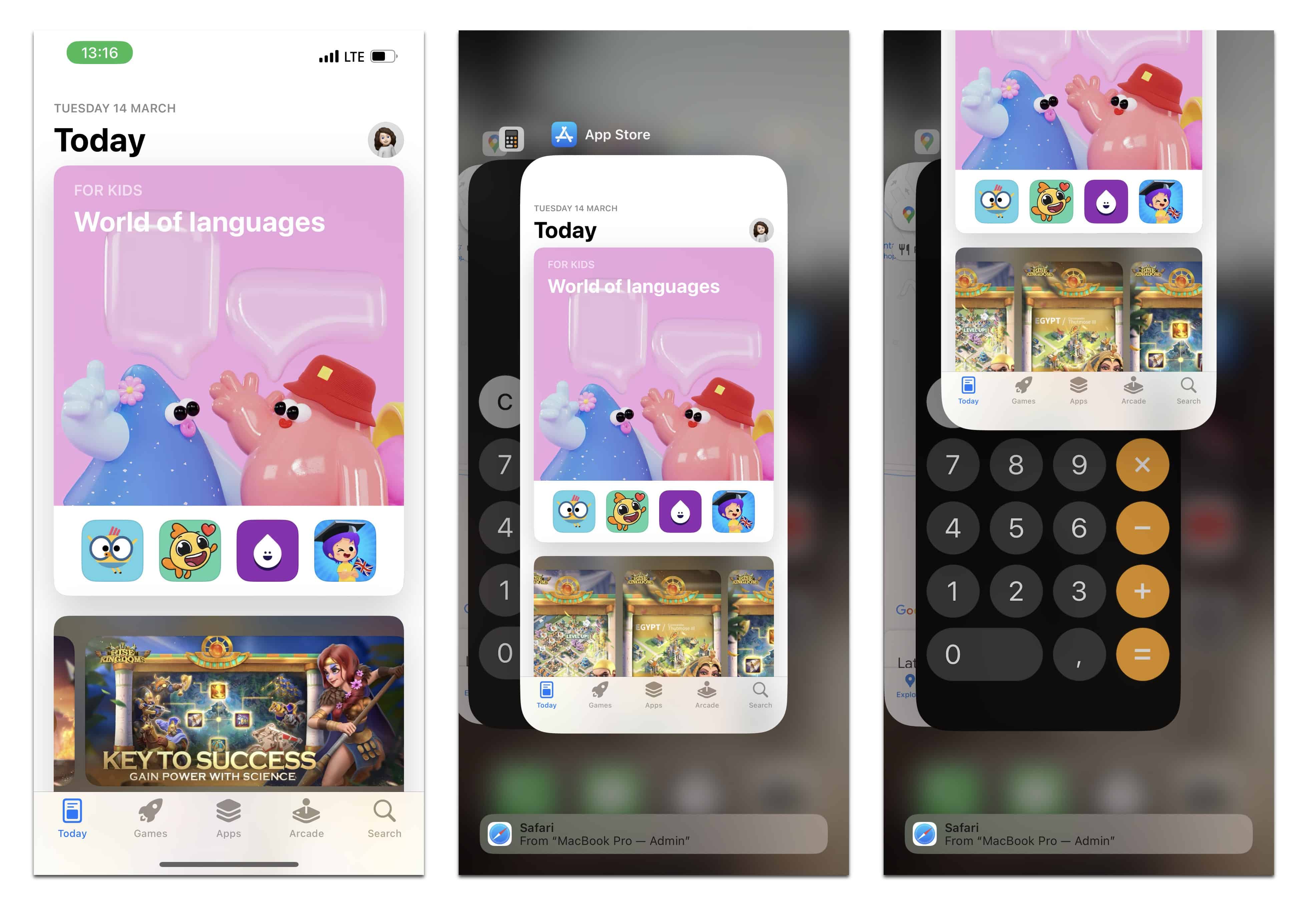
When you open the App Store again, it loads fresh data. In older versions of iOS, you could clear the App Store cache by tapping any tab in the app ten times. This method no longer works.
Final thoughts
The App Store cache is small, but stale cache files can break store pages, updates, and sign-in. You can clear them by hand with one Terminal command and Finder, or in one list with App Cleaner & Uninstaller.
We recommend App Cleaner & Uninstaller for this task. It finds the caches in both places, including the WebKit caches that are easy to miss. If a clean cache doesn’t help, the same app resets App Store and keeps it installed.
Frequently asked questions
Is it safe to clear the App Store cache on a Mac?
Yes. Cache files are temporary, and App Store creates new ones the next time you open it. Quit App Store first, and delete only the App Store folders, not the whole Caches folder. App Cleaner & Uninstaller moves the files to the Trash, so you can put them back until you empty it.
Will clearing the App Store cache delete my apps or purchases?
No. Your installed apps stay in the Applications folder, and your purchases stay linked to your Apple Account. The cache holds only temporary copies of store pages, images, and app listings.
Where is the App Store cache stored on a Mac?
~/Library/Caches
Copy
/private/var/folders
Copy
open $TMPDIR../C/com.apple.appstore/
Copy
What is the difference between clearing the cache and resetting App Store?
Clearing the cache removes only cache files: 31 items, 713 KB on our test Mac. Reset Application in App Cleaner & Uninstaller removes all of App Store’s service files, including its container, caches, and preferences file: 189 items, 13.3 MB. In both cases, App Store stays installed.
Why don’t I see App Store in App Cleaner & Uninstaller?
App Store is a built-in macOS app, and App Cleaner & Uninstaller hides built-in apps by default. Open Settings → General and tick Show system applications.
Can I uninstall App Store from my Mac?
No. App Store is part of macOS, and macOS protects its built-in apps from removal. If App Store misbehaves, reset it instead: App Cleaner & Uninstaller clears its service files and keeps the app installed. Our guide to deleting default Mac apps explains the limits.
How do I clear the App Store cache on iPhone or iPad?
iOS and iPadOS don’t let you delete the App Store cache. Force-close the App Store instead: open the App Switcher and swipe up on the App Store preview. When you open the App Store again, it loads fresh data.